

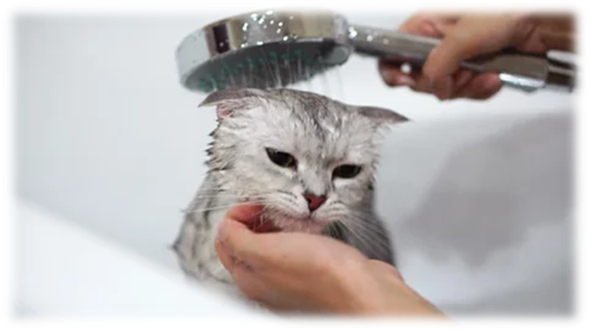
1. Start with a Calm Cat
- Tire them out first with playtime or wait until they’re relaxed (after a nap is ideal).
- Consider brushing them beforehand to remove tangles and loose fur.
- A calm cat is much easier to handle than one in high-energy mode.
2. Set Up Everything Beforehand
- Use a non-slip mat or towel in the sink or tub.
- Fill with 2–3 inches of lukewarm water before bringing your cat in—running water can spook them.
- Have cat-safe shampoo, a cup for rinsing, towels, and treats nearby.
- Optional: A helper to gently hold or distract your cat with treats or calming words.
3. Use the “Less Is More” Approach
- Only bathe when absolutely necessary (cats are great self-cleaners).
- Focus on the problem area if it’s just a spot-clean (e.g. dirt, oil, or something sticky).
- Use a damp washcloth for gentle cleaning instead of full immersion if your cat’s extremely bath-averse.
4. Stay Calm, Be Gentle
- Speak softly and keep movements slow and deliberate.
- Wet your cat using a cup—not a sprayer—and avoid the face and ears.
- Use a small amount of cat-safe shampoo and rinse thoroughly to avoid residue.
5. Dry and Reward
- Wrap your cat in a soft towel and gently pat dry.
- Use a second dry towel if needed—some cats tolerate a low, quiet blow-dryer, but many don’t.
- Offer treats and praise afterward to help build a positive association for next time.
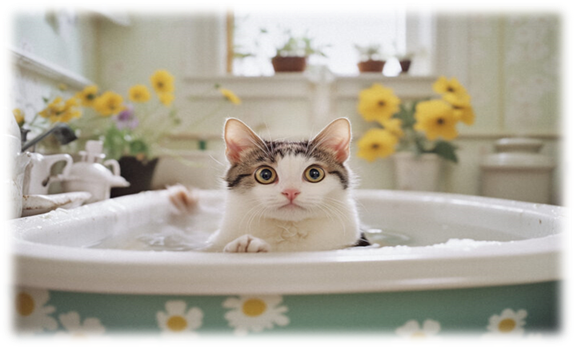
🧼 Bonus Tip:
If your cat is very anxious, consider dry shampoo, pet wipes, or professional grooming as alternatives.